Appraised by Kate Burton and David Steer
Guest Speaker: Greig O’Kane
Greig O’Kane from Nevill Studios in Dunedin, was the guest speaker on Monday night (12th September).
Nevill Studios was opened as a photographic studio on 1934 by the Nevill sisters. Greig O’Kane’s family bought the business over 30 years ago, and began a transformation from photographic studio to framers, after seeing how long it took their framer to get their prints framed, and realising they could do it quicker!
Greig showed us a variety of glasses and mat cuts, and shared some interesting facts:
- Mat cutters (such as the Logan brand) are getting harder to come by, so if you have one, treat it like gold! One place in Wellington is still selling them along with the guide rails, but it doesn’t look like anyone else is importing them to New Zealand now
- Greig tends not to use colour mats on black and white prints, as it can be too distracting, so will usually use either a black, white or, occasionally, grey mat
- He doesn’t believe that colours really go in and out of fashion – what is most suitable to the print in colour and size should look good on almost any wall
- Nevill Studios recommend neutral or simple frames for exhibition work, so that viewers can focus on the image (e.g. a white mat in a black frame), while in the home, more colour and complexity might be suitable for the environment
- They use the ‘eye-o-meter’ for working out dimensions – what looks most pleasing to the eye, tends to be the most balanced. Too small of a mat/frame will hem in the image, while it will be lost in too large of a mat
- They also recommend that the bottom border of a mat be cut slightly wider than the other three sides – by about 5mm for a small image, or up to 15mm for something larger. Greig feels that if the border is even on all sides, it can give the illusion that the image is slipping down a bit in the frame
- Nevill Studios use either archival hinging tape to fix images to backing boards, or a heat mount press to dry mount the image and flatten it so there’s no ripples
- They only use acid-free, archival products in their work – anything they do must be completely reversible, so that the art is conserved properly, and not damaged in the process
- They only use wood or aluminium componentry, no plastic or wood composites. They prefer NZ made, but some of the gilt or high-end finishes have to be imported from overseas
- Museum glass is a new technology – it’s super hi-def, with UV coating. It’s not cheap, but is almost invisible and allows the viewer to see the true colour of an image, so is perfect for high-quality images
- There is also the older style conservation glass – this costs around 30% more than standard glass, while museum glass costs 50-60% more
- Nevill Studios use a computer mat cutter now, which can do almost any kind of shape from standard to curved or intricate
- One week’s work by a human mat cutter can be done in about 2 hours by the computer cutter!
- Nevill Studios sell all of the bits and pieces related to framing, so you can buy whatever you need separately, from glass to dry mount tissue, and hooks and nails are free
- If you need any advice, contact info here: http://www.nevillstudios.co.nz/
2016 Spring Print Exhibition Results
This year we held our Spring Print Exhibition at the Dunedin Community Gallery (28-31st August). Having the exhibition on for a few days gave members a chance to view the images multiple times if they wanted, and enabled us to share our work with the public.
Along with the Spring Print exhibition, we had the Dunedin Junior Photography Exhibition on display. 2016 was the first year for this and we were pleased to get 18 entrants who submitted photos on variety of subjects. 10 images were selected for the final exhibition. We look forward to running this again next year.
In addition we presented a digital exhibition of member’s work from the Filderstadt Photoclub (FCF). In 2015 a member of the FCF visited a DPS exhibition, and this has led to several interactions between the two clubs this year.
We had a good number of visitors through the gallery, and all positive feedback. Our second meeting of the month was held on Mon 29th at the Community Gallery where we heard feedback from the judges (Paul Sorrell, Natural History; John Hart, Open) and got to catch up with one another over drinks and nibbles.
Congratulations to everyone who had images accepted for the exhibition. The honours and awards images are in the slideshow below.
47th Dunedin Festival of Photography
The Dunedin Photographic Society Inc. invites you to submit entries for exhibition in the 47th Dunedin Festival of Photography for 2016.
The Festival is open to all New Zealand residents, and also to financial members of PSNZ affiliated camera clubs.
All the rules and entry information can be found on our website: https://dps.org.nz/2016dunedinfestival/
We look forward to receiving your entries.
Important Dates
Opening Date for Entries: Friday 19th August
Closing Date for Entries: Friday 30th September
Judging: Saturday 15th October
Festival Exhibition Opening: Friday 4th November
Festival Exhibition: Saturday 5 – 10th November; Dunedin Community Gallery, Princes Street, Dunedin
Workshop: 22nd Aug
Our next meeting on Monday 22nd 7.30pm is an indoor (vege) light painting workshop. It’s going to be a fun night where you can let your creative side run wild and come up with some interesting images
Please bring:
– camera
– tripod
– shutter remote if you have one
Optional items to bring:
– small torches, glow sticks, iPads, LEDs, mobile phones
– interesting shaped/coloured fruit or veges
– still life objects e.g. books, bottles, flowers, old boots, anything!
– large pieces of dark, dull fabric e.g. velvet (not shiny, preferably not wrinkly)
– download a free app such as Pocket Softbox for a selection of any coloured light
This event is open to anyone, but a gold coin donation on the night is requested for non-DPS members.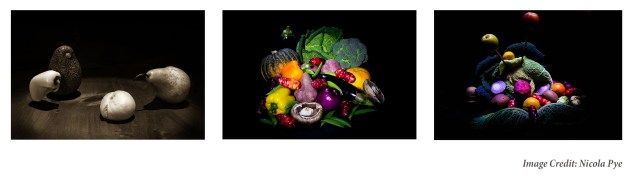
Guest Speaker: David Wall
David Wall was Monday night’s (8th August) guest speaker. David who runs a stock photography business (http://www.davidwallphoto.com), recently returned from a family trip to the U.S. He rented a RV campervan and embarked on a 22 day road trip, leaving from Los Angeles travelling up to the Grand Canyon, through Colorado and around to San Francisco. He showed us some spectacular landscape photographs of various geological places of significance such as the Grand Canyon, slot canyons such as the Antelope Canyon, the Rattlesnake Canyon Arches, hoodoos (tall, thin spires of rock), and the Yosemite National Park. He also showed some photographs of the ancient ancestral ruins at the World Heritage site of Mesa Verde National Park.
He also visited Las Vegas which was a complete contrast to his preceding days of travelling through rich cultural and geological areas. Nevertheless, he found it a very interesting place to photograph the opulence and grandiosity of the city. After Las Vegas, he moved on to Yosemite National Park and then a further three hour drive to San Francisco, before heading back along the Pacific Coast Highway to Los Angeles. He also took some helicopter rides around the city to take some aerial shots of Alcatraz, the airport, various highways, the Golden Gate bridge and some colourful palattes of salt ponds.
During the planning stages of these trips, David does some research using Google Earth to explore the areas he intends to visit and also view the photos others have taken in these areas. David’s photographs certainly made us feel in awe of the diversity in landscapes from another part of the world. If you missed the talk, you can see many of David’s photographs of his trip on his website.
July Print of the Month Results (Category: Flora & Fauna)
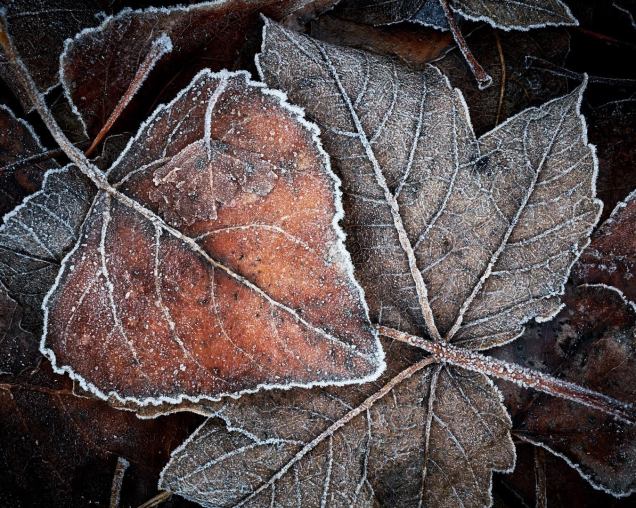
Appraised by Craig McKenzie
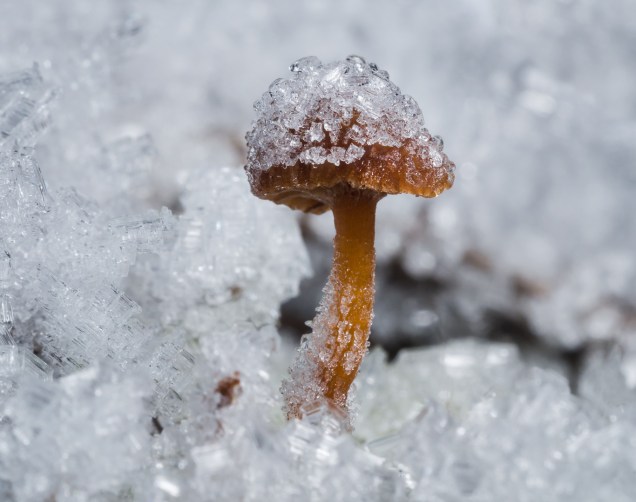
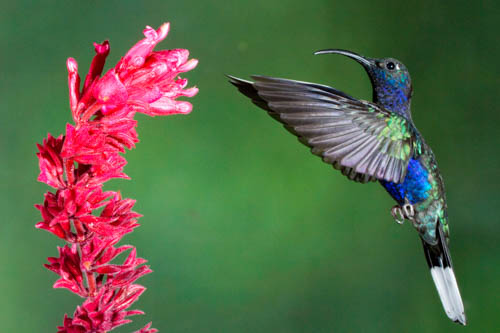
3rd Place – Hummingbird by Ken Trevathan (image to come)
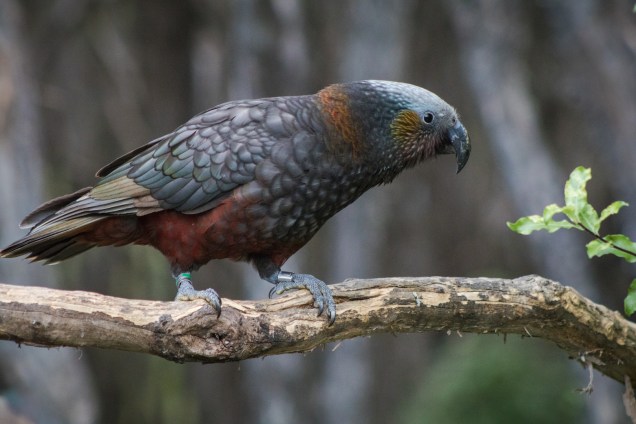
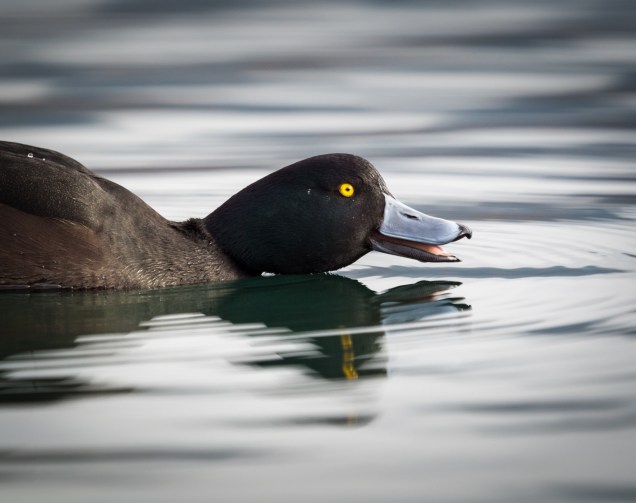
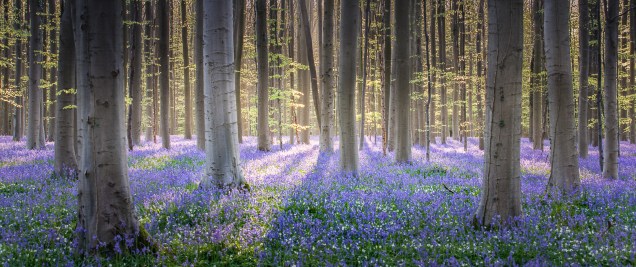
July Projected Image of the Month Results (Category: Flora & Fauna)
Appraised by Craig McKenzie
Member Profile: Kathy Richards
| Year joined DPS | 2015 |
| Signification positions held in DPS | Council Member |
| Current camera | Nikon D3000 |
| Favourite camera you have ever used/had | Nikon D3000 |
| Which do you prefer: Film or Digital? | Digital |
| And why? | Because I can experiment more and see the results instantly |
| Which do you prefer: Print or Projected? | |
| And why? | Projection is convenient and easy to use and share but I enjoy viewing images in hard copy more |
| How did you get into photography? | My husband was interested in photography and I used his camera to record the kids as they were growing up. I enjoy all sorts of art forms. Drawing, painting, fabric sculpture etc. For me, photography is just another medium for sharing how I see the world. |
| What is your most memorable moment from your time at DPS so far? | I had two goals when I joined DPS. To get an image on the wall in an exhibition and to get an image into the NZ Camera book. I have achieved both so I am stoked. |
| What keeps you inspired with your photography? | I tend to be obsessive with hobbies, then get bored of them and move on to something else. But photography is so diverse, there are always new concepts, subjects and tools to explore, I don’t think I will ever get bored with it. I look up photographers that inspire me, but mainly I am inspired by the world around me. |
| Do you have a particular theme that would summarise your photographs? | I like the wabi sabi concept. The beauty of imperfection, impermanence, the state between being and not being. Layers of peeling paint, rusty cars, stark trees, skeleton leaves, subtle colours, patterns and textures. I also look for juxtapositions and emergence. |
| Where is the best place that you have been to take photos? | On the glacier at Franz Josef. Blue ice, melted into constantly changing sculptures. |
| What piece of equipment could you not do without in your camera bag? | My camera. That’s all I really need. I don’t have much equipment. One camera, two lenses, one battery, an ND filter. A couple of little bean bags which are useful to hold my camera still when I don’t have my tripod. |
| Do you have any advice for your fellow photographers? | Stay true to yourself. Make images that you like and are proud of, not just ones that meet the brief, or you think the judges will like. Use the title to help tell the story. Always shoot in RAW and use good editing software to get the most from your image. |
Do you have any favourite photography related websites or web resources that you’d like to share with other members? |
I like pinterest for ideas like portrait poses and tips. Graphicriver has some fun photoshop actions. http://graphicriver.net/search?utf8=%E2%9C%93&term=photoshop+action&as=0&referrer=homepage My favourite photography book resource is ’30-Second Photography’ edited by Brian Dilg. |
Member Profile: John Casey
| Year joined DPS | 2003 |
| Signification positions held in DPS | President, Treasurer, Councillor, Festival Co-Ordinator, Natex Co-Ordinator |
| Current camera | Nikon 750 |
| Favourite camera you have ever used/had | Nikon 750 |
| Which do you prefer: Film or Digital? | Digital |
| And why? | Have never got into developing and my serious interest in photography has only really developed since the advent of digital |
| Which do you prefer: Print or Projected? | |
| And why? | Nothing like holding a good print in your hand. I like digital also but print is more permanent and a quick ready reference |
| How did you get into photography? | Did quite a bit in the old days of youth – mainly centered around family and youth Forest and Bird Activities. Later at end of school days in Tonga I did the Tourist type photos in slides and a little later the camera died and I did not replace it as Robin did most of the family photography.
John Hart ran a series of lectures through DPS one of which I attended was made welcome, the bug regenerated I bought a camera and the rest is history |
| What is your most memorable moment from your time at DPS so far? | Being awarded a Life Membership at the 125th celebration |
| What keeps you inspired with your photography? | Watching the crop of excellent photographers we presently have in the club and trying to learn from them how I can effectively capture the things I want to. I want the end result to match my vision which I find very difficult to do but have lotsa fun trying |
| Do you have a particular theme that would summarise your photographs? | Water, Landscape, Buildings, lowlight and backlight |
| Where is the best place that you have been to take photos? | Milford Road and Sound |
| What piece of equipment could you not do without in your camera bag? | Lens hoods |
| Do you have any advice for your fellow photographers? | Follow your vision and don’t give up |
| Do you have any favourite photography related websites or web resources that you’d like to share with other members? | DPS (Digital Photography School) Cambridge in Colour |
| Any other comments? | I enjoy my membership of DPS and by participating, listening and looking, learn much which then challenges me to put into practice |

