Please note: all images on this site remain copright of the original photographers. Contact us to request use of any images (webmaster.DPSNZ@gmail.com)
President on three occasions, the last for our 100th Anniversary year.
Chairman of the Organising Committee of the 50th PSNZ Convention in Queenstown
Current Patron
Honours
ONZM, FRPS, FPSA, Hon FPSNZ, Hon FNPSNZ
Current camera
Canon D5
Favourite camera you have ever used/had
Although I love my D5, I had a love affair with Olympus for a number of years owning OM1, OM2, OM3 and OM4’s
Which do you prefer: Film or Digital?
Digital
And why?
I enjoy the ability one has to manipulate the image, to make it into the picture you envisaged at the time of taking.
Which do you prefer: Print or Projected?
Print
And why?
I am a print maker, and prefer this medium to the projected image. I had a long involvement with Slides from the early 1950’s and even pioneered Multi Screen Audio Visuals in NZ , in the early 1970’s. My AV’s being shown around NZ, in Australia as well as in London.
How did you get into photography?
I was given my first camera about 1942 whilst at High School. Living next to my parents in St Clair were the Erwin’s; energetic members of DPS. Occasionally Mrs Erwin would bring members of DPS in to our garden to photograph the Gold Fish in our Lily Pond, which fascinated me. And as I grew up I was impressed by the pictures of scantily clad girls on the covers of the Photographic Magazines in the Book Shop at the St Clair Beach, so these two influences were significant.
What is your most memorable moment from your time at DPS so far?
Presenting my Multi Screen, 6 Projector AV. ‘Something Special’ To the 21st. PSNZ Convention in Queenstown. – To a standing ovation.
What keeps you inspired with your photography?
The Challenge of image making and the involvement with the special people who share the same interest.
Do you have a particular theme that would summarise your photographs?
I love the Landscape and the challenge that it presents. I have pursued many branches of photography, from Marine to Portraiture and Genre, but it continues to be the Landscape which presents for me the greatest challenge.
Where is the best place that you have been to take photos?
I have photographed in many places from Mexico to Tibet, in The UK the USA and Europe, but the place that really brings me on is the Mackenzie Country and the ‘Lindis’ Pass. When I am there and the light is “right” I think that I ‘vibrate’.
What piece of equipment could you not do without in your camera bag?
My Canon 28mm to 135mm zoom.
Do you have any advice for your fellow photographers?
Learn to Look. And having looked – See!
Any other comments?
Some thoughts on photographing the Landscape.
The very nature of the photographic process is perhaps the reason for the landscape being so seldom done well. Photographs are made in a 125th of a second, usually less, and are often made by casual photographers who are out “Taking Pictures”. If the painter could rip off a canvas in so short a time, the world would be without many of its great works. The photographer who understands the landscape takes time to contemplate and actually feel what is going on in front of the lens. The skill is in ‘making’, rather than the predatory ‘taking‘ which leads to success.The great landscape relies on fine union of trained eye and imaginative mind. To make it you must be not only intellectually involved, but sensitive to what is going on in the subject, if you are you, you will have a better chance of communicating your feelings to your viewers. The photograph should open up our minds to the mystery of the scene and allow our imagination to to escape”.
Because I can process the image exactly how I saw it in my head when I pushed the button. AND its a lot cheaper (once you have your computer setup)
Which do you prefer: Print or Projected?
Both – no preference
And why?
They each do different things. I prefer projected images now because all my photo work is done on the computer, but the printed image allows for more care and thought both when during the creative process and when being interpreted by the viewer. It is a pity for instance, when the photographer has put a lot of effort into making a distinctive image, enters it into the projected images section of a salon where it might even win an award but it is still only seen for 6 seconds during a convention. A print submission will be on the wall for the entire convention and is available for people to absorb and make comment back to the author.
How did you get into photography?
My whole family were passionate photographers and I had the usual box brownie when I was 12, then a gap of many years till I was given a Kodak Instamatic, which took square photos so I dutifully recorded the babies and pets till my husband gave me a small 35mm and a week or so after that we went to Taranaki and while he was busy I spent a whole day driving around Mt Taranaki shooting off 5 films in all. The difference for me was that the 355 mm format was making a picture rather than just a record, the shape suited how I saw things and suddenly I couldn’t want to do more and more. On the flight back home I said to my husband “Thank you again for my Christmas camera but I have had such fun today that I think I need to go and spend a lot more money and get a proper SLR”. And so I did.
What is your most memorable moment from your time at DPS so far?
Walking into the exhibition and seeing my first ever top print award on the wall.
What keeps you inspired with your photography?
One of the current inspirations is continuing to enter images in salons throughout NZ. As I cannot roam as I used to, my material is based on my archives, and when an entry is due, I mentally review what I have on hand and rework it ti suit the current requirements. I am also co-manager with Ian Thomson of the yahoo photo group DNZ-3 online and it has competitions every fortnight alternating set subject and open (https://groups.yahoo.com/neo/groups/dnz-3/info if anyone is interested)
Do you have a particular theme that would summarise your photographs?
I don’t have an exclusive theme, but interests include landscape, specially what I term “specific or detailed landscape”, architecture and created images; i.e. montaged multi image compositions to illustrate an abstract idea.
Where is the best place that you have been to take photos?
Travel is always inspiring and Yosemite was a highlight, but then so was a week spent with friends in Hanmer Springs, going out all day up the Clarence Valley, coming home at night then spending evenings reviewing the day’s efforts, the best workshop I have ever done.
What piece of equipment could you not do without in your camera bag?
Well, my camera of course, but for me the best piece isn’t in the camera bag it’s in my head, and that’s the piece I enjoy using the most. Probably because it can create endless images from just a single frame, providing that has good basic ingredients to start with.
Why have we not seen you much of late?
I find it difficult to get along to club meetings these days but I am still participating in digital competitions when I can, as well as coming along to any special events.
Do you have any advice for your fellow photographers?
Always, always follow your own pathway regardless of where others think you should be going. Real inspiration comes from your own individuality, not from conforming to a set of salon rules.
Smart phones do not make smart pictures, but they are wonderful to record the exact moment which would be well gone by the time you ran for the SLR. I hope this novelty for the gadget-minded will wear off fast for serious image makers and allow us to get back to what we do best, crafting thoughtful, artistic works for others to enjoy.
Camera craft editor for a few years, after Jean Nelson gave it up. Was also a “judge/selector” for competitions including Festival at times.
Honours
FPSNZ
Current camera
Nikon D800e
Which do you prefer: Film or Digital?
Digital
And why?
With digital you get another chance if people shut their eyes and also scanning negatives was a boring task.
Which do you prefer: Print or Projected?
Projected
And why?
I’m fairly active on Flickr and don’t need prints on there and I could never get my mounts right.
How did you get into photography?
My grandfather was a member of a Liverpool photography society and had some salon success about 1910. My Grandma on the other side worked as a photographer’s assistant in Dunedin about the same time and both my parents were photographers. I started with family portraits on a plastic Diana camera about age 10. As a teenager I went with Dad to the Waimate Photography Club and learned lighting for portraits and darkroom work from the town’s Professional photographer, a Mr Jim Hore. At first when I came to Dunedin I was busy with University study and getting to know a young lady who later agreed to be my wife, but when I started work I found time every second Monday to go along to the Otago Museum for DPS meetings. One of my first prints of a rose was said to look like a “cabbage” and I have tried to progress from that.
What is your most memorable moment from your time at DPS so far?
There are many memories but sometime in the 80’s (near the time of Halley’s Comet) DPS hosted the national PSNZ meeting and I was lucky to show an AV program on the University set to music from Chariots of Fire. In those days every fade was manual with two projectors and one had to get the timing right while hoping no slide would jam! Fortunately all went well. My wife and 6 week old daughter were there to see the show and Rebecca is possibly still the youngest to attend a PSNZ convention. She had her photo taken with a senior member age about 86.
What keeps you inspired with your photography?
I see a lot of pictures every day in selecting for groups on Flickr which helps with ideas. Also just driving around Otago especially when the weather is “bad”
Do you have a particular theme that would summarise your photographs?
Just looking for beauty in landscapes or people
Where is the best place that you have been to take photos?
Probably in Prague when the mists were rising off the Vlatava River just after sunrise. It was a cold autumn morning but I was so entranced by the light and recession behind statues on the Charles Bridge that I didn’t realise how cold I was until it was time to go.
What piece of equipment could you not do without in your camera bag?
I need two, both a camera and a lens 🙂
Do you have any advice for your fellow photographers?
Just that you need to find the light and that won’t happen if you are sleeping in 🙂
Do you have any favourite photography related websites or web resources that you’d like to share with other members?
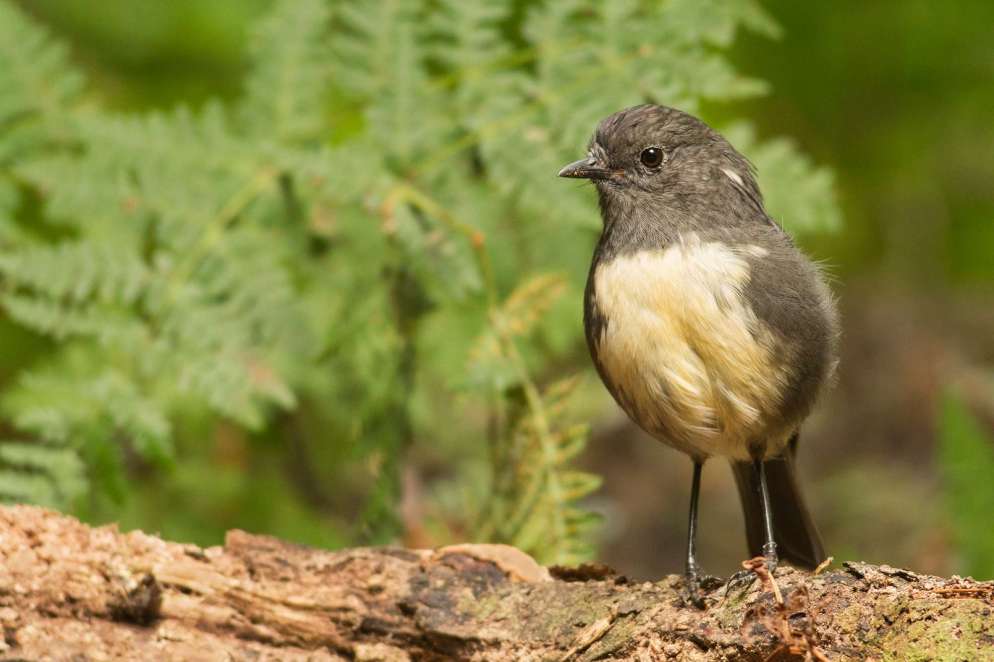
Another member exhibition is coming up this week. Paul Sorrell is having an exhibition of “Winged Wonders” at Orokonui Ecosanctuary as part of the Wild Dunedin Festival of Nature. This is bound to be a beautiful exhibition of stunning bird life and will be well worth the short trip out to the Orokonui Visitors Centre. Don’t forget your camera, as you are bound to be inspired to try and capture your own images of the winged wonders out there.
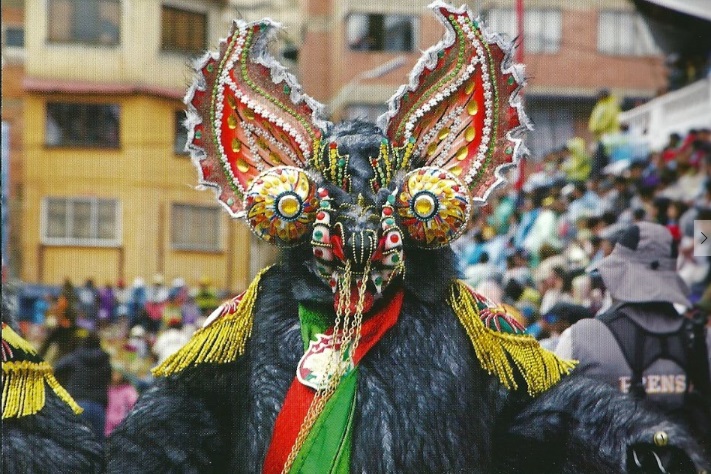
One of our newer members, Carlos Biggemann, currently has an exhibition on at the Dunedin Art Station. This is a wonderful, colourful display of images from the famous Carnaval de Oruro, in Bolivia.
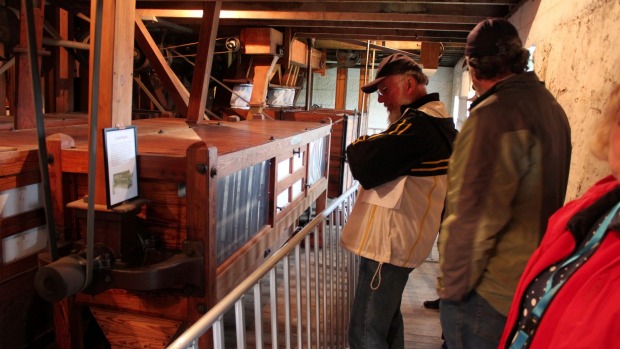
Our next field trip will be held on Sunday 10th April. We will be heading to Oamaru and Clarks Mill. There is a $10 entry charge for Clarks Mill.
We will meet at 8.30am at the Railway Station carpark and sort out carpooling from there. We will head to Oamaru first for a wander around the old part of town and then after lunch visit Clarks Mill.
Please indicate to the Field Trip Coordinator (via email: fieldtrips.DPSNZ@gmail.com) if you intend to come along.
The Dunedin Photographic Society runs three kinds of competition throughout the year.
Print & Projected Image of the Month (Monthly Competitions)– These are an opportunity to submit work for critique. The critique is intended to be constructive and give you suggestions on how to improve and grow as a photographer. It’s amazing how often someone may point out something such as a distracting patch of light that you hadn’t noticed…. now it’s obvious and all you can see!
The varying themes encourage members to try something different and are open to interpretation, ‘open’ means you can submit anything you like. Any degree of processing will be considered. The only subjects which tend to be stricter are Natural History and Photojournalism. These should accurately represent the subject/event.
This is a good place to start showing your work. All images will be commented on. Points are awarded to everyone who submits an image and extra points are awarded for the top three images on the night. Points standings can be found here: Standings.
Successful images from this competition should be considered for the seasonal exhibitions.
Seasonal Exhibitions (Seasonal Exhibitions)– The club runs four seasonal exhibitions Spring and Autumn Print, and Winter and Summer Projected Image. You can enter up to 6 images in each of the the Open and Natural History sections (note: the seasons are just to indicate the time of the year the exhibition is held – it is not a restriction on the type of image you can enter). The images entered are submitted to accredited judges or ‘experts’ for appraisal. The purpose of these is to produce an exhibition of quality work, and therefore not all images will be accepted. The judges are directed to accept a percentage of the images submitted and will provide comment on only those that have been accepted.
While it can be disappointing not to have images accepted, it is important to realise that judging can be subjective; an image accepted by one judge may have been rejected by another.
Successful images from the seasonal exhibitions should be considered for the Festival.
Dunedin Festival of Photography (Festival)– The Festival is run once a year by the Society and is open to any NZ resident or society member to enter. This competition attracts a large number of entrants including those with photographic honours and professional photographers, and as such the standard is high. Acceptance into the festival should be seen as an impressive achievement and a stepping stone to the PSNZ Regional or National exhibitions. These images are not critiqued but are displayed in a local gallery for a week where they can be viewed by the public.
For new members, entering your images for the first time is always the hardest. You do need to have a bit of a thick skin, but positive feedback feels good and shows you a way forward. So don’t be shy, start entering now.
Inspired by Paul Sorrell’s talk and his wonderful pictures at our last meeting, we are going to have a field trip to the Orokonui Ecosanctuary. http://orokonui.nz/
When:Sun 13th March, 10.30am
Meeting Point: Carpark at Orokonui – please let us know if you need transport
Cost: $16 for entry (10% discount for seniors, and if we have a big enough group I think they give 10% discount)
There should be plenty to see and at 11am will be the Takahe feeding. We will spend a couple of hours wandering around and then can meet back at the visitors centre for a coffee/bite to eat.
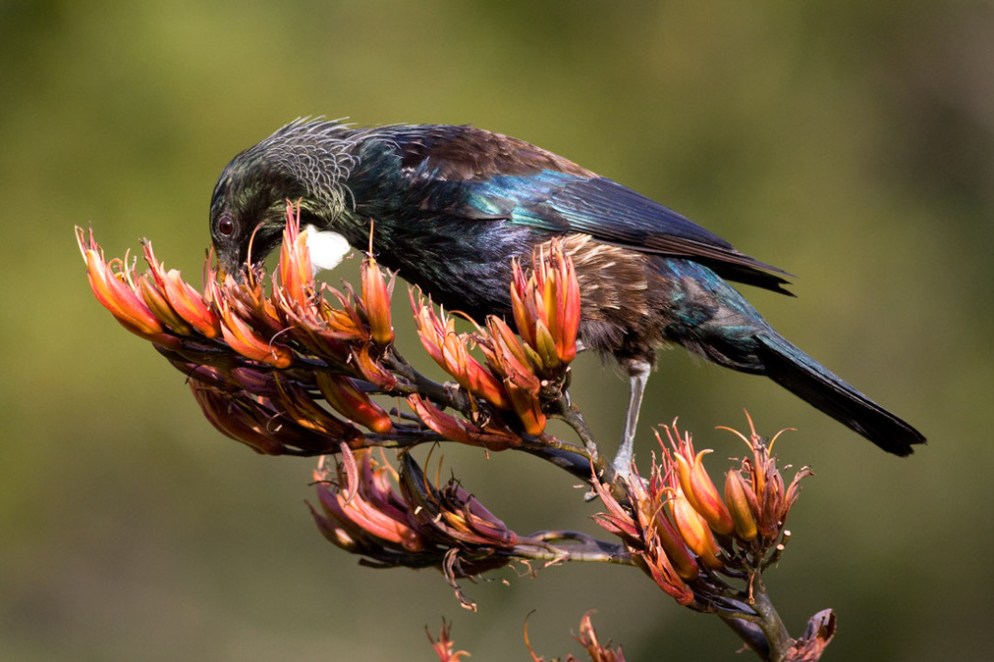
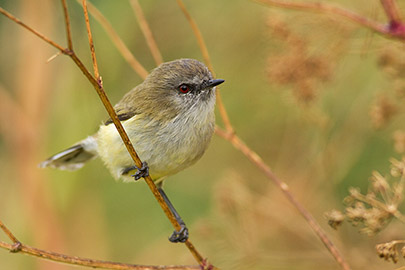
Tui on flax – Paul Sorrell
 Dunedin Photographic Society